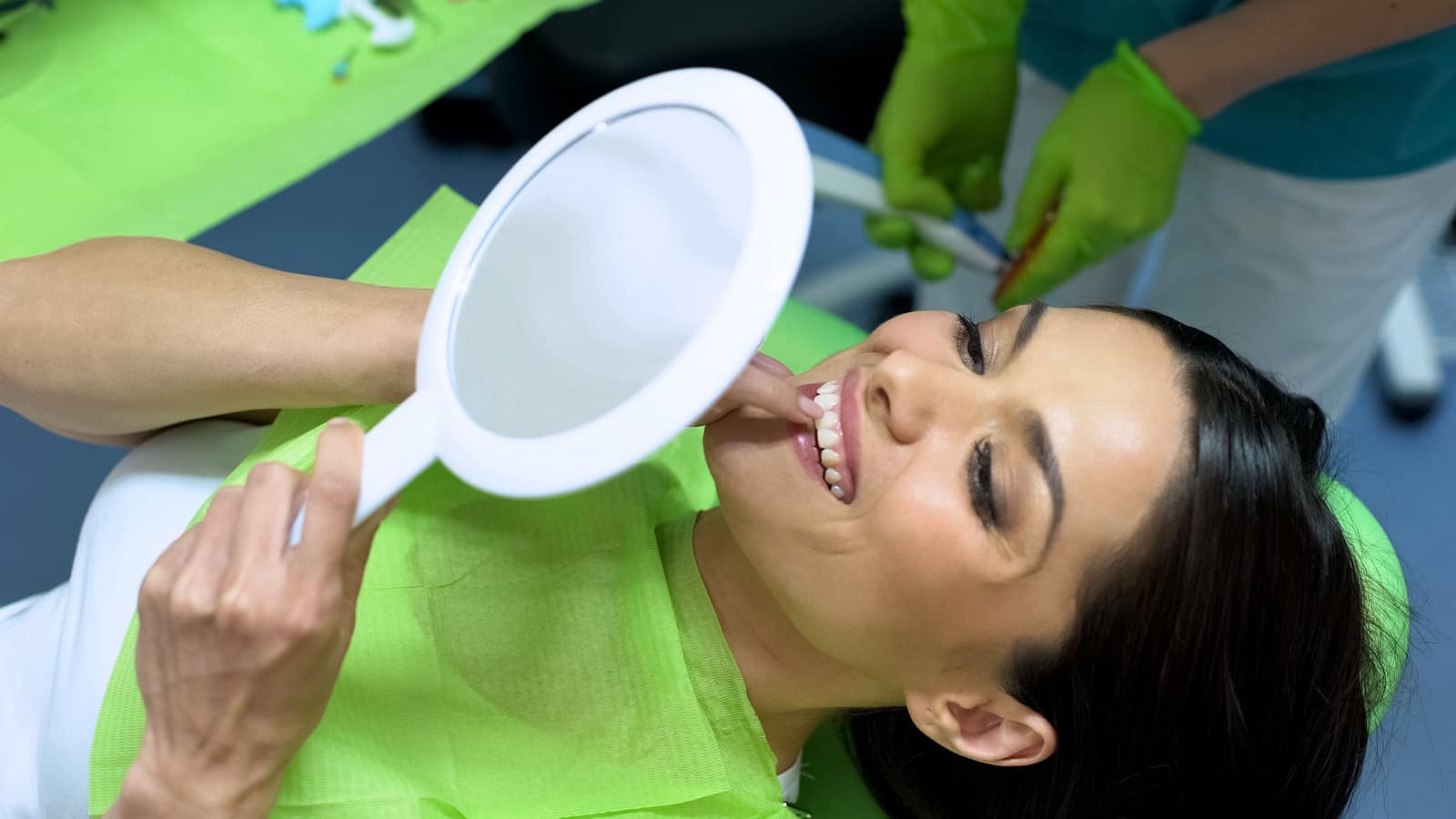
Thinking about improving your smile? Whether you're self-conscious about discoloration, bothered by chips and gaps, or ready for a complete transformation, cosmetic dentistry offers more options than most people realize. This guide walks Fort Collins patients through everything available at Foothills Family Dental — what each treatment does, how to choose the right one, and what to realistically expect.
What Is Cosmetic Dentistry?
Cosmetic dentistry is a branch of dental care focused on improving the appearance of your teeth, gums, and overall smile. While general dentistry addresses health and function — preventing decay, treating disease, maintaining oral hygiene — cosmetic dentistry adds an aesthetic dimension to that care.
Importantly, appearance and function aren't mutually exclusive. Many cosmetic treatments also strengthen teeth, improve bite alignment, or correct issues that could worsen over time if left untreated. The best cosmetic outcomes happen when both goals are pursued together.
At Foothills Family Dental, Dr. Richard Pass and Dr. Elizabeth Beckner approach cosmetic care with the same clinical precision as any other procedure — backed by advanced technology and a commitment to results that feel as good as they look.
Cosmetic Dentistry Options Available in Fort Collins
Teeth Whitening
Best for: Patients with stained or yellowed teeth who want fast, visible results with minimal commitment.
Professional teeth whitening is the most popular cosmetic dental treatment — and for good reason. It's non-invasive, delivers results in a single appointment or over a short at-home program, and can lift tooth color by several shades.
At Foothills Family Dental's teeth whitening service, we use professional-grade whitening agents that are significantly more effective than anything available over the counter. Unlike store-bought strips, professional whitening is customized to your teeth and supervised to prevent sensitivity.
What causes tooth staining?
- Coffee, tea, and red wine
- Tobacco use
- Certain medications (particularly tetracycline antibiotics taken in childhood)
- Natural aging — enamel thins over time, revealing the yellower dentin beneath
- Foods with strong pigments (berries, tomato sauce, soy sauce)
What whitening can and can't do Whitening works best on natural tooth enamel. It will not change the color of dental crowns, veneers, bonding, or other restorations — an important consideration if you have existing dental work in visible areas. It also doesn't address structural issues like chips or gaps. But for patients whose primary concern is color, it's the fastest and most affordable path to a noticeably brighter smile.
How long does whitening last? Results typically last 1–3 years depending on lifestyle habits. Touch-up treatments and touch-up trays help maintain results between appointments.
Dental Bonding
Best for: Minor chips, cracks, gaps between teeth, or slight discoloration — especially for patients who want an affordable and quick fix.
Dental bonding is one of the most versatile and underappreciated cosmetic treatments. A tooth-colored composite resin is applied to the surface of a tooth, sculpted into the desired shape, and hardened with a curing light — all in a single appointment, typically without anesthesia.
Bonding can:
- Repair chipped or cracked teeth
- Close small gaps between teeth
- Cover surface discoloration that whitening doesn't address
- Slightly reshape irregular or uneven teeth
- Protect exposed tooth roots if gum recession is a concern
The honest tradeoffs Dental bonding is less durable than porcelain veneers — the composite resin material is more susceptible to staining and chipping over time, typically lasting 5–10 years before requiring touch-up or replacement. It's also more technique-sensitive, meaning the quality of the result depends significantly on the skill of the dentist. It's an excellent, cost-effective solution for minor corrections, but patients with more significant aesthetic goals may find veneers offer a longer-lasting outcome.
Porcelain Veneers
Best for: Patients who want a dramatic, comprehensive smile transformation that lasts.
Veneers are ultra-thin shells of porcelain that are permanently bonded to the front surfaces of teeth. They're custom-fabricated in a dental laboratory to your exact specifications — shape, size, length, and color — and the result, when done well, is a natural-looking smile that genuinely looks like your best teeth.
Veneers address a wide range of cosmetic concerns simultaneously:
- Deep staining that whitening can't resolve (including fluorosis and tetracycline staining)
- Chips and fractures
- Gaps (diastemas) between teeth
- Teeth that are too short, too small, or irregularly shaped
- Mild crowding or misalignment in the front teeth
What the process involves Porcelain veneers typically require two appointments. At the first, a small amount of enamel is removed from the front of the tooth to create space for the veneer (this is permanent — veneers are a lifelong commitment). A digital scan or impression is taken, and temporary veneers are placed while your custom restorations are fabricated. At the second appointment, the permanent veneers are bonded in place.
Because they're made from porcelain, veneers are highly stain-resistant and exceptionally durable — typically lasting 15–20 years with proper care.
For patients whose smile concerns extend beyond the front teeth, or where underlying structural issues need to be addressed, full mouth reconstruction may be worth exploring as a more comprehensive solution.
Invisalign
Best for: Adults and teens with crowding, spacing, or alignment issues who want to straighten teeth discreetly.
Invisalign at Foothills Family Dental uses a series of clear, removable aligners to gradually move teeth into their ideal positions. For patients who would benefit from orthodontic treatment but don't want traditional metal braces, Invisalign is the most popular alternative.
Why patients choose Invisalign:
- Aligners are virtually invisible — most people won't notice you're wearing them
- Removable for eating, brushing, and flossing — no food restrictions, no special cleaning tools
- Smooth plastic is more comfortable than metal brackets and wires
- Appointments are typically less frequent than traditional orthodontics
What Invisalign can treat Invisalign works well for mild to moderate cases of crowding, spacing, overbite, underbite, and crossbite. Severe cases may still require traditional braces or a combined approach — your consultation will clarify which path is best for your specific alignment needs.
How long does Invisalign take? Treatment length varies significantly based on the complexity of the case. Mild corrections can sometimes be achieved in as few as 6 months; more involved cases may take 18–24 months. The average adult Invisalign case runs around 12–18 months.
A note on compliance Invisalign aligners must be worn 20–22 hours per day to work as intended. Patients who only wear them occasionally won't see the expected progress. Motivation and consistency are important factors in whether Invisalign delivers the best result for you.
It's also worth noting that properly aligned teeth are easier to clean and less prone to certain types of wear — so the benefits of Invisalign extend beyond aesthetics into long-term dental health.
Smile Makeover and Full Mouth Reconstruction
Best for: Patients with multiple cosmetic and/or functional concerns who want a comprehensive, coordinated result.
When a single cosmetic treatment isn't enough to achieve your goals, a smile makeover combines multiple procedures into a customized treatment plan. This might include whitening plus veneers, bonding plus Invisalign, or a comprehensive full mouth reconstruction that addresses both aesthetics and function at the same time.
Full mouth reconstruction differs from cosmetic treatment in that it's often also medically necessary — addressing severe wear, broken-down teeth, bite problems, or significant tooth loss alongside the aesthetic goals. It may incorporate restorative work like dental crowns, dental bridges, or dental implants in addition to purely cosmetic treatments.
The defining feature of a smile makeover is that it's designed holistically — every element of the plan is coordinated to produce a harmonious final result, rather than individual treatments done in isolation.
How to Choose the Right Cosmetic Treatment
The right choice depends on three factors: what you're trying to change, how significant the change needs to be, and your timeline and budget. Here's a simplified framework:
If your main concern is color: Start with professional whitening. It's fast, affordable, and reversible. If whitening doesn't achieve the result you want (common with internal staining or existing restorations), veneers are the next step.
If you have a minor chip, crack, or gap: Dental bonding is usually the most efficient solution. Quick, affordable, no enamel removal required.
If you want a comprehensive aesthetic transformation: Porcelain veneers deliver the most dramatic and long-lasting cosmetic result for the front teeth. If multiple teeth across the arch are involved, or if underlying functional issues exist, a full mouth consultation is the right starting point.
If your teeth are healthy but crooked or crowded: Invisalign addresses alignment without any alteration to the tooth surface. It's particularly compelling for patients whose primary issue is position rather than color or shape.
If you have both aesthetic and restorative needs: A full smile consultation with our team will clarify which combination of treatments makes the most sense for your overall dental health and goals.
The Technology Behind Our Cosmetic Dentistry
Great cosmetic results require great tools. At Foothills Family Dental, we use:
- Digital scanning: Eliminates uncomfortable traditional impressions. Digital scans are more precise, faster, and allow us to show you a preview of your planned result before any work begins.
- Digital X-rays: Allow us to evaluate what's happening beneath the surface — ensuring any underlying issues are identified and addressed before cosmetic work is placed.
- CBCT scanner: Provides 3D imaging that's particularly valuable for full mouth reconstruction and implant planning.
These tools allow our team to plan with confidence and deliver results that are precise, predictable, and beautiful.
Combining Cosmetic and Preventive Care
One of the most important things to understand about cosmetic dentistry is that it works best on a foundation of good oral health. Veneers placed over decaying teeth won't last. Whitening an infected mouth won't solve the underlying problem.
This is why we always begin with a thorough examination. Regular dental cleanings and exams ensure your teeth and gums are healthy before and after cosmetic treatment — protecting your investment and your long-term health.
If you've been delaying a cosmetic treatment because of anxiety about dental visits, we want you to know that comfort is a genuine priority at our practice. Our nitrous oxide sedation and oral conscious sedation options make even more involved procedures comfortable for patients who experience dental anxiety.
Frequently Asked Questions About Cosmetic Dentistry
Is cosmetic dentistry covered by insurance?
Most purely aesthetic treatments — whitening, veneers, bonding for cosmetic purposes — are not covered by dental insurance. However, some procedures have both cosmetic and restorative components (for example, bonding to repair a fractured tooth) that may be partially covered. We recommend checking with your insurer and discussing your plan during your consultation.
How do I know if I'm a candidate for cosmetic treatment?
Most patients with healthy teeth and gums are candidates for some form of cosmetic improvement. A consultation is the best way to identify which options are appropriate for your specific situation. We'll take a look at your teeth, discuss your goals, and give you an honest assessment of what's achievable and how.
Will cosmetic work look natural?
When done well, yes — absolutely. Modern porcelain materials, digital design tools, and skilled technique allow our dentists to create results that are virtually indistinguishable from natural teeth. Our goal is never a blindingly white, clearly "done" look unless that's specifically what you want — it's a smile that looks like the best version of yours.
How do I maintain my cosmetic results?
Good oral hygiene is the foundation: brush twice daily, floss daily, and visit us twice a year for professional cleanings. Avoid habits that accelerate wear or staining — tobacco use, excessive coffee or red wine, chewing on hard objects. For veneers and bonding, avoid biting fingernails or using your teeth as tools. Wearing a nightguard if you grind your teeth protects cosmetic work from excessive wear.
Can I combine multiple cosmetic treatments?
Yes, and often that's the most effective approach. Whitening before veneer or bonding placement, Invisalign followed by whitening, or a full smile makeover combining several treatments — these combinations are common and well-planned to produce a cohesive final result.
What's the difference between cosmetic bonding and veneers?
Both improve the appearance of teeth, but they differ in material, durability, and scope. Bonding uses composite resin applied chairside in one visit — it's faster and more affordable but less stain-resistant and typically lasts 5–10 years. Veneers are custom-fabricated porcelain restorations that require two appointments — they're more durable, more stain-resistant, and last 15–20+ years, but require permanent removal of a thin layer of enamel.
What to Expect at Your Cosmetic Consultation
Your cosmetic consultation at Foothills Family Dental is a no-pressure conversation. We'll:
- Listen to what you'd like to change and understand your goals
- Examine your teeth and gums to assess your oral health baseline
- Take any imaging needed (X-rays, digital scans) to get a complete picture
- Walk you through the options that make sense for your situation
- Provide a clear breakdown of the process, timeline, and associated costs
There's no obligation, and we're happy to discuss phased treatment plans if budget or timing is a consideration. The goal of the consultation is to make sure you leave with a clear understanding of your path forward — whatever that looks like.
Schedule Your Cosmetic Consultation in Fort Collins
If you've been thinking about improving your smile, the first step is a conversation. Our team at Foothills Family Dental is experienced, honest, and genuinely invested in helping you achieve the result you're looking for.
Call us at (970) 482-6841 or book your appointment online.
Foothills Family Dental provides cosmetic and general dental care to patients throughout Fort Collins, Loveland, Windsor, Greeley, and the greater Northern Colorado region.